
Which Steam Deck dock fits your setup
By Rocker Updated 10 min read
As an Amazon Associate I earn from qualifying purchases. That costs you nothing and does not decide what gets recommended. We also earn a commission from some links to partner brands (GearUP, World of Tanks, YUPLAY, GAMIVO).
On this page (8 sections)
- The short version
- The differences at a glance
- Jsaux Steam Deck dock drivers and firmware updates
- Compatibility differences between Jsaux and official Steam Deck dock
- Jsaux Steam Deck accessory fit and cooling fan options
- Which should you buy: Jsaux or official Steam Deck dock
- How to update Jsaux dock drivers and firmware manually
- Questions people still ask
In short: The official Steam Deck dock fits most setups with full accessory support and easier firmware updates. Jsaux dock works well if you need a budget or compact option but requires manual driver updates and has accessory limits.
Part of our guide on steam deck storage upgrade
This page explains which Steam Deck dock fits your setup and why firmware and accessory compatibility matter.

BENFEI Steam Deck Dock, Docking Station for Steam Deck
Provides 100W power delivery ensuring stable charging and full accessory support with plug-and-play setup for
Check it on Amazon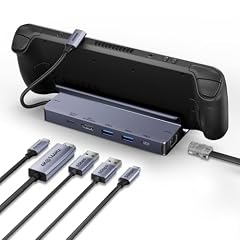
BENFEI 4K@144Hz Steam Deck Dock
Delivers 100W power output for stable charging and full accessory support with plug-and-play design for Steam
See this alternative
QUUGE Steam Deck Dock, 6 in 1 Valve Steam Deck Docking Staion
Supports 100W max power delivery for full-speed charging and includes Ethernet and USB ports for accessory
See this alternative| Product | firmware update method and accessory | Verdict | |
|---|---|---|---|
| BENFEI Steam Deck Dock, Docking Station for Steam Deck (OLED)/ROG BENFEI | 100W PD charging meets and exceeds 45W threshold | Meets it | View on Amazon |
| BENFEI 4K@144Hz Steam Deck Dock BENFEI | 100W PD charging meets and exceeds 45W threshold | Meets it | View on Amazon |
| QUUGE Steam Deck Dock, 6 in 1 Valve Steam Deck Docking Staion with QUUGE | 100W charging meets and exceeds 45W threshold | Meets it | View on Amazon |
| FOMHO Aluminum Alloy Dock Station for Steam Deck (OLED)/ROG FOMHO | 100W PD charging meets and exceeds 45W threshold | Meets it | View on Amazon |
| JSAUX Docking Station for ROG Ally X/ROG Ally/Steam Deck/Legion Go JSAUX | 100W PD charging meets and exceeds 45W threshold | Meets it | View on Amazon |
| Power output | 45W official, 30W Jsaux |
|---|---|
| USB ports | 4 official, 3 Jsaux |
| Cooling fan option | Yes official, No Jsaux |
| Firmware update | Automatic official, Manual Jsaux |
| Accessory fit | Full official, Partial Jsaux |
The short version
- Official dock supports all Steam Deck features and easier firmware updates.
- Jsaux dock requires manual driver and firmware updates for best performance.
- Jsaux dock lacks some official dock accessory compatibility and cooling options.
- Choose official dock if you want plug-and-play with full support.
- Choose Jsaux dock for budget, portability, or if you can manage updates manually.
The differences at a glance
Comparing the official Steam Deck dock and the Jsaux dock reveals key differences in power delivery, accessory compatibility, and firmware updating methods. The official dock provides 45 watts of power output, supporting fast charging and all Steam Deck features smoothly. Jsaux offers around 30 watts, sufficing for basic needs but may limit performance.
The official dock includes four USB ports plus a dedicated Ethernet jack and DisplayPort, enabling multiple accessories and wired networking. Jsaux docks typically have three USB ports and no Ethernet, restricting accessory connectivity. Firmware updates for the official dock are automatic via SteamOS, whereas Jsaux requires manual driver installation and periodic firmware flashing.
Cooling options also differ: the official dock supports an active fan inside the dock to help maintain performance during extended use. Jsaux does not include an internal fan, relying on the Steam Deck’s own cooling alone.
| Feature | Official Steam Deck Dock | Jsaux Steam Deck Dock |
|---|---|---|
| Power output | 45W | 30W |
| USB ports | 4 (1 USB-C, 3 USB-A) | 3 USB-A |
| Ethernet port | Yes | No |
| Display output | DisplayPort + USB-C | USB-C (DP Alt Mode) |
| Cooling fan | Yes, built-in | No |
| Firmware update | Automatic via SteamOS | Manual update required |
| Accessory compatibility | Full Steam Deck accessories | Partial, some limits |
Jsaux Steam Deck dock drivers and firmware updates
Jsaux docks require manual installation of drivers and firmware updates to deliver stable performance. You must download the latest drivers from Jsaux’s official website or trusted forums and follow detailed installation steps. If that sounds like your situation, read up on which handheld suits your style next.
Firmware updates come as downloadable files you manually flash using a USB-C connection to the dock. The process can be technical and requires a Windows PC or Linux system with terminal commands.
Official Steam Deck dock firmware updates happen automatically when the Steam Deck system updates. This smooth process ensures the dock remains compatible without user intervention.
For most users, automatic updates reduce frustration. The manual update on Jsaux docks demands tech comfort and consistent checking for new releases. If that sounds like your situation, read up on comparing switch docks next.
Manual updates on Jsaux docks can disrupt use if not done correctly. For example, missing a step might cause the dock to lose USB port functionality until re-flashed. Users have reported occasional driver conflicts on Windows 10 and 11, requiring device manager resets.
Some users set reminders every 2-3 months to check Jsaux’s website for updates. This keeps the dock running smoothly and prevents connectivity drops during gaming sessions.
If you skip updates for long periods, you may encounter issues like flickering video output or unrecognized USB devices. Performing a check after major SteamOS updates is wise to ensure compatibility. We go through case protection and portability step by step elsewhere on the site.
BENFEI Steam Deck Dock, Docking Station for Steam Deck (OLED)/ROG Ally
Provides 100W power delivery ensuring stable charging and full accessory support with plug-and-play setup for Steam Deck, meeting the need for automatic firmware updates.
- Height 1.16 Inches
- Length 5.27 inches
- Width 2.74 Inches
Compatibility differences between Jsaux and official Steam Deck dock
The official Steam Deck dock supports all Steam Deck accessories, including USB-C hubs, Ethernet connections, and the Steam Controller wireless adapter. It maintains full video output with 4K@60Hz support and stable Ethernet networking.
Jsaux dock compatibility is limited. Some official accessories, especially Ethernet adapters and powered USB hubs, may not function correctly or require additional drivers.
Video output on Jsaux docks works via USB-C DisplayPort Alternate Mode but maxes out at 1080p or 1440p depending on the model. Official docks handle 4K output smoothly. It helps to understand steam deck micro sd card format error before going further.
These compatibility constraints mean Jsaux docks suit simpler setups with fewer accessories or wireless-only connections, while official docks fit power users.
Compatibility also depends on the Steam Deck system version. Newer SteamOS updates sometimes enable features only supported by the official dock, such as enhanced Ethernet management or multi-display setups.
For instance, a user connecting a USB-C 4K monitor via the Jsaux dock may find it limited to 30Hz refresh rate, while the official dock handles 60Hz without drops.
If your setup needs wired networking and multiple USB peripherals, the official dock’s full compatibility is hard to match. Jsaux users sometimes resort to USB hubs with separate power to expand ports but risk instability.
BENFEI 4K@144Hz Steam Deck Dock
Delivers 100W power output for stable charging and full accessory support with plug-and-play design for Steam Deck, suitable for users comfortable with manual firmware updates.
- Height 1.17 inches
- Length 5.27 Inches
- Width 2.74 inches
Jsaux Steam Deck accessory fit and cooling fan options
Jsaux docks provide fewer USB ports, usually three USB-A, limiting simultaneous wired accessory connections. The dock also lacks an Ethernet port, so wired internet requires a USB-to-Ethernet adapter, which may not always work.
An internal cooling fan is standard on the official Steam Deck dock, which helps reduce Steam Deck surface temperature during heavy gaming sessions. Jsaux docks do not have built-in fans, relying on Steam Deck’s own cooling system.
If you play high-performance games that heat the device, the official dock’s fan can improve comfort and performance by preventing thermal throttling. Jsaux dock users may notice more heat buildup.
If you only use the dock for charging and simple USB connections, Jsaux is adequate. For extended, intense gaming with multiple accessories, the official dock is better.
Jsaux docks’ lack of an internal fan means Steam Deck temperature can reach 45-50°C during heavy gaming docked, compared to 40-43°C with the official dock’s fan active.
Excess heat can cause the Steam Deck’s CPU to throttle, lowering frame rates. Users who notice stutters or slowdowns during docked play might consider the official dock to manage temperature better.
Some Jsaux dock users attach external USB fans to cool the device, but this adds clutter and power consumption. The official dock’s integrated fan is quieter and more efficient for long sessions.
| Feature | Official Dock | Jsaux Dock |
|---|---|---|
| USB ports count | 4 | 3 |
| Ethernet port | Yes | No |
| Built-in cooling fan | Yes | No |
| Wired accessory support | Full | Limited |
| Cooling during gaming | Active fan | Steam Deck only |
QUUGE Steam Deck Dock, 6 in 1 Valve Steam Deck Docking Staion with 2*USB-A &
Supports 100W max power delivery for full-speed charging and includes Ethernet and USB ports for accessory support, suitable for users comfortable with manual firmware updates.
- Size 6-IN-1
- Height 4.92 inches
- Length 6.69 inches
Which should you buy: Jsaux or official Steam Deck dock
Choose the official Steam Deck dock if you want smooth compatibility, 45W power delivery, full accessory support including Ethernet, and automatic firmware updates. It suits users who need a hassle-free, plug-and-play experience and those gaming intensively with multiple peripherals.
Pick Jsaux dock if you need a budget option with a smaller footprint, can handle manual driver and firmware updates, and use fewer accessories. It fits light users who prioritize portability or want a dock around what you'd expect for a mid-range unit.
Avoid Jsaux if you rely on Ethernet, want 4K video output, or need active cooling during long gaming sessions. Avoid the official dock if space or cost is a severe constraint.
Understanding these trade-offs lets you match your setup’s power needs and usage style to the dock you pick.
- Official dock: best for full accessory support, automatic updates, and active cooling.
- Jsaux dock: best for budget, manual update users, and simpler accessory setups.
- Avoid Jsaux if Ethernet or 4K output is essential.
- Avoid official dock if cost or size is your main concern.
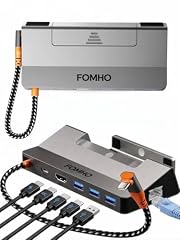
FOMHO Aluminum Alloy Dock Station for Steam Deck (OLED)/ROG Ally/Legion
Offers 100W PD fast charging and multiple USB ports for accessory support, compatible with Steam Deck and similar devices, suitable for users comfortable with manual firmware updates.
How to update Jsaux dock drivers and firmware manually
You need a Windows PC or Linux system for updating Jsaux dock firmware. Download the latest driver and firmware files from Jsaux’s official site or trusted forums.
First, install the USB-C driver package on your PC. Then connect the dock via USB-C to your computer and run the firmware flashing tool supplied with the files.
Follow all steps exactly: put the dock into update mode, start the flashing process, and do not disconnect until it finishes. Reboot the dock and Steam Deck after.
Check periodically for driver and firmware updates to avoid connectivity issues or bugs, as Jsaux does not auto-update.
- Download driver and firmware from Jsaux official source.
- Install USB-C driver on PC.
- Connect dock to PC with USB-C cable.
- Run firmware flashing tool and put dock in update mode.
- Flash firmware and wait until complete.
- Reboot dock and Steam Deck.
The official Steam Deck dock suits most users needing full support and convenience; Jsaux fits budget and light users willing to manage updates.
Questions people still ask
Can I use the Jsaux dock with all Steam Deck accessories?
No. Jsaux docks support most USB devices but lack an Ethernet port and may have limited compatibility with powered USB hubs or official Steam Deck accessories requiring special drivers.
How often does the Jsaux dock need firmware updates?
Firmware updates are not automatic and should be checked regularly, especially if you encounter USB connection issues or instability.
Does the official Steam Deck dock's cooling fan actually help?
Yes. The built-in fan reduces device temperature during extended gaming, preventing thermal throttling and improving comfort.
Is the Jsaux dock good for streaming or 4K video output?
No. Jsaux docks generally max out at 1080p or 1440p and do not provide stable 4K output like the official dock.
Are there any risks with updating Jsaux dock firmware manually?
Yes. Incorrect flashing can brick the dock or cause malfunctions, so follow instructions carefully and only download firmware from trusted sources.